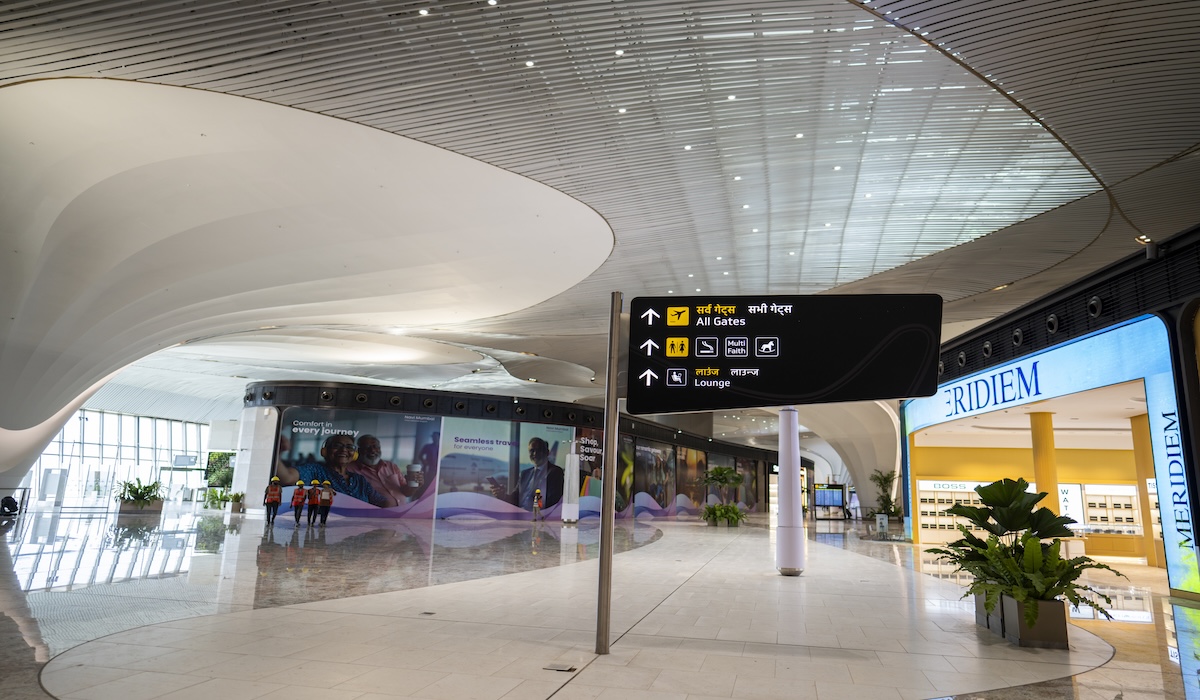
46 Indian cities are connected by Navi Mumbai International Airport.
By connecting 46 locations around India, Navi Mumbai International Airport has improved domestic connectivity and lessened traffic at Mumbai Airport. The airport's location, terminal layouts, and complete route list are all included in this comprehensive overview.
India's aviation network is receiving a significant boost with the opening of Navi Mumbai International Airport (NMIA). This new airport, which was constructed to relieve the strain on Mumbai's congested air traffic, is anticipated to enhance connection throughout the nation and facilitate travel for millions of people annually.
The airport, which is situated in Navi Mumbai, was intended to be a contemporary center with robust domestic linkages from the beginning. Travelers will now be able to fly to 46 locations around India, connecting large cities, popular tourist attractions, and significant regional hubs, according to network plans.
More airline alternatives, quicker travel times, and less traffic at current airports are all benefits for frequent travelers.
Overview of the Airport
The airport is convenient for both business and leisure travelers because to its strategic location close to Mumbai and important industrial zones. Additionally, its location facilitates more effective connections between western India and the country's north, south, and east.
The airport is called Navi Mumbai International Airport.
ICAO Code: VANM; IATA Code: NMI
Location: Ulwe, Maharashtra, India's Navi Mumbai
Airport type: International
Goal: Improve connectivity throughout India and lessen traffic at Mumbai Airport
Facilities and Terminal
The development of Navi Mumbai International Airport is being done in stages, with an emphasis on passenger comfort and efficiency.
A contemporary integrated terminal built to accommodate both domestic and international aircraft is part of the first phase. The terminal is anticipated to provide:
Large areas for security and check-in
Intelligent baggage handling systems
Options for dining and shopping
Navigation that is easy for passengers
Contemporary infrastructure built for future growth
When finished, the airport is anticipated to serve as one of India's main aviation hubs and handle millions of travelers each year.
Navi Mumbai is connected to 46 domestic destinations.
The domestic network of the Navi Mumbai Airport encompasses a large number of locations, including both big capitals and up-and-coming smaller destinations. This extensive connectivity promotes travel, commerce, and regional mobility while also enhancing access throughout India.
Srinagar, Jammu, North India
Delhi, Chandigarh, Dehradun, Hindon, and Bareilly
East and Northeast India's Jaipur, Agra, Lucknow, Ayodhya, Gorakhpur, and Varanasi
Patna Bagdogra Durgapur Kolkata Central India Bhopal Indore Jabalpur Raipur Nagpur
West India Ahmedabad Vadodara Rajkot Jamnagar Bhavnagar Dui South India
Bengaluru, Hyderabad, Tirupati, Chennai, Vizag, Coimbatore, Madurai, Mangaluru, Kannur, Cochin, Thiruvananthapuram, Hubli, Belagavi, Maharashtra, and Adjacent Cities
Kolhapur, Chhatrapati Sambhajinagar, Goa Region, Goa (MOPA), Goa (Dabolim), Eastern Industrial Hub, Jharsuguda
Airlines Using the Routes of Navi Mumbai Airport
From Navi Mumbai International Airport, a number of Indian airlines are anticipated to run flights on the proposed domestic network, which will serve both significant regional and big metropolitan locations.
Travelers will probably have more options when it comes to pricing, schedules, and connections thanks to the combination of full-service and low-cost carriers.
The Air India Express
It is anticipated that Air India Express will concentrate on busy metro routes:
Bengaluru and Delhi
Air Akasa
As it continues to grow domestically, Akasa Air is anticipated to run flights to:
Goa (Mopa), Delhi, Kochi
IndiGo Kolkata
The bulk of routes from Navi Mumbai are anticipated to be operated by IndiGo, the biggest airline in India by market share, linking both major and smaller cities around the nation:
Ahmedabad and Agra
Chhatrapati Sambhajinagar (Aurangabad) Ayodhya Bareilly Belagavi Bengaluru Bhavnagar Bhopal Chandigarh Chennai Coimbatore Dehradun Delhi
Diu Hindon (Ghaziabad) Goa (Dabolim) Goa (Mopa) Gorakhpur Hubli Hyderabad Indore Jabalpur Jaipur Jammu Jamnagar Jharsuguda Kannur Kochi Kolhapur Kolkata Lucknow Madurai Mangaluru Nagpur Patna Rajkot Srinagar Bagdogra (Siliguri) Thiruvananthapuram Tirupati Vadodara Varanasi Visakhapatnam
Why Travelers Care About This Airport
The current airport in Mumbai is among the busiest in India. More flight options and less traffic are anticipated at Navi Mumbai International Airport, particularly on domestic routes.
This airport may be more convenient for residents of Navi Mumbai, Thane, Pune, and surrounding areas than going to central Mumbai. Additionally, the new hub can provide cheaper pricing and increase flight availability during busy times.
Improved connectivity frequently makes it simpler for visitors to reach smaller locations that formerly required lengthy rail trips or connecting flights.
What This Signifies for the Aviation Network in India
The expansion of Navi Mumbai International Airport is a reflection of India's rising air travel demand. New airports are becoming necessary to meet demand as more people choose flying over other modes of transportation.
The airport is anticipated to play a significant role in bolstering regional connections and promoting tourism growth, with 46 domestic destinations initially planned.
More domestic and international routes will probably be added as operations grow, enhancing travel choices nationwide.
Concluding Remarks
The Navi Mumbai International Airport is more than just a piece of infrastructure. It signifies a change in the way India is organizing its future air transport requirements.
The airport is expected to develop into a significant hub that connects travelers in all directions throughout India because to its excellent domestic connectivity, contemporary architecture, and potential for expansion.


