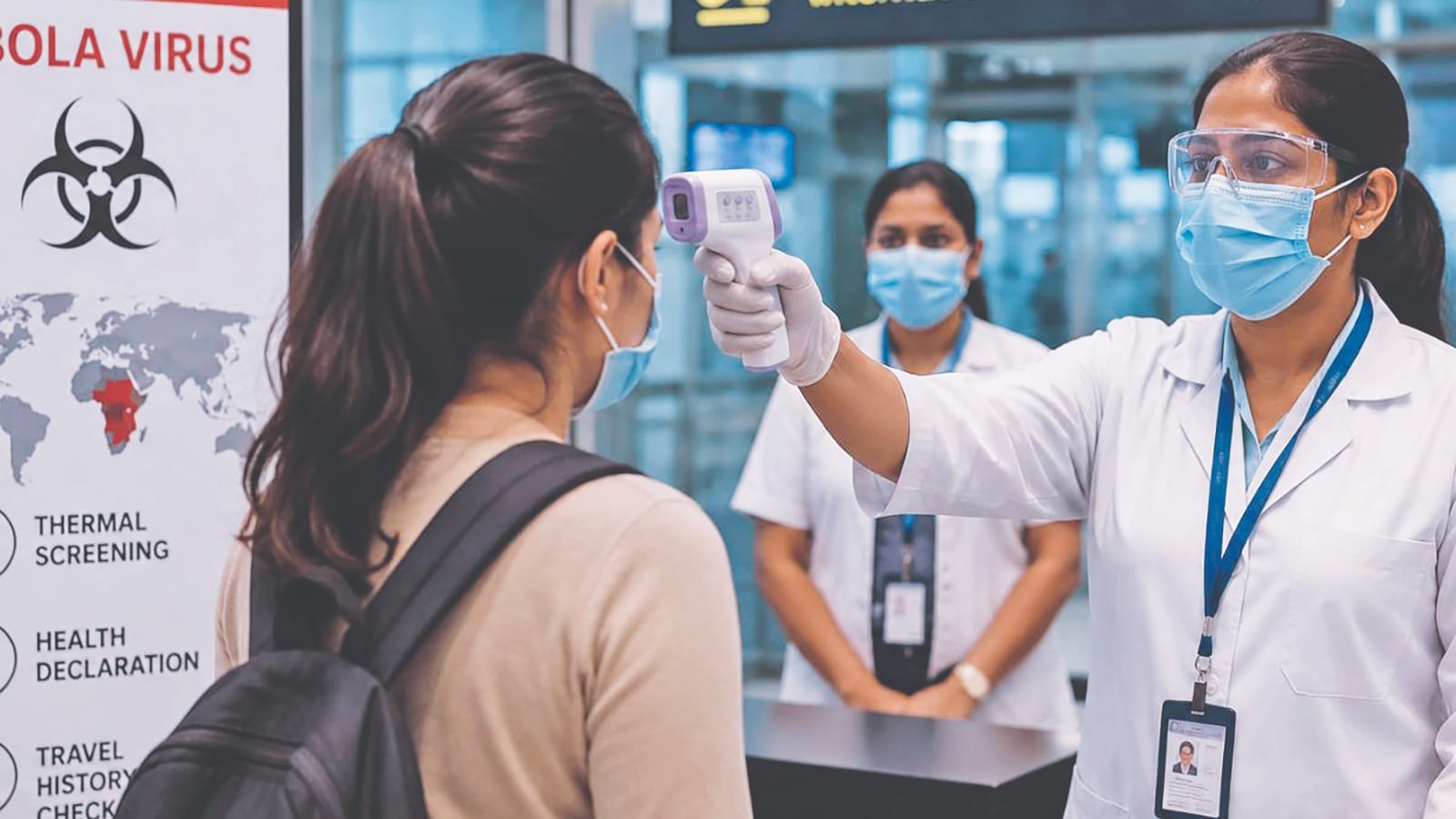
Countries Stricterly Check Travelers from Ebola-Affected Nations at Airports
India, Thailand, South Korea, and the United States are among the nations that have tightened health screenings and admission requirements for visitors connected to Ebola-affected areas of Africa. Before flying, Indian travelers should be aware of the following.
Stricter airport inspections and health regulations are being implemented globally as a result of the Ebola virus outbreak in South Sudan, Uganda, and the Democratic Republic of the Congo. This is more important than it might seem for Indian travelers who link via Africa, Southeast Asia, or the Gulf.
Here is a brief overview of the nations that have already tightened regulations for visitors to areas affected by Ebola.
1. Thailand
Following the WHO emergency declaration, Thailand acted swiftly, formally designating Uganda and the Democratic Republic of the Congo as infected regions as of May 21, 2026. Travelers from impacted nations now have to deal with:
Declarations of the Thailand Digital Arrival Card (TDAC) are required.
Airport health screenings
Temperature monitoring
Potential surveillance by Thai health officials in the future
Additionally, Thai citizens are required to register via the Thai Health Pass system.If your journey covers Central or East Africa, Indian travelers using Bangkok as a transit point to East Asia or Australia may anticipate additional inquiries.
2. Korea
Under the Q-CODE system, South Korea has increased the scope of quarantine screening. South Sudan, Uganda, and the Democratic Republic of the Congo are now subject to stricter inspection regulations. Travelers might have to:
Send in a Q-CODE health declaration.
Complete more health forms.
Go through a more thorough arrival screening
Conduct further quarantine inspections
Additionally, travel advisories for Uganda and portions of the Democratic Republic of the Congo, particularly Ituri province, have been upgraded by South Korea.
This serves as yet another reminder that traveling abroad is gradually include digital health disclosures.
3. India
Passengers traveling from or passing through Ebola-affected nations, including as the Democratic Republic of the Congo, Uganda, and South Sudan, are subject to an official advise from India.
Before immigration, affected travelers must notify airport health officials if they exhibit any of the following symptoms:
A fever
Weariness
A headache
Pain in the muscles
Diarrhea or vomiting
A sore throat
Unknown hemorrhage
Travelers who had direct touch with suspected Ebola patients are subject to the same rules.
Additionally, Indian authorities are requesting that visitors keep an eye out for symptoms for 21 days following their arrival and report any ailment right away.For holders of Indian passports, this now appears to be more akin to increased surveillance than direct limitations. However, if cases continue to spread, airport checks may become more stringent very quickly.
4. The US
By implementing targeted entrance restrictions, the United States has gone farther than the majority of nations. As stated by the CDC:
Restrictions may apply to non-US passport holders who have traveled to the DRC, Uganda, or South Sudan in the last 21 days.
There are already improved screening and monitoring procedures in place.
Airports in the United States may have additional entry restrictions.
Additionally, the U.S. has upgraded its travel alert for the DRC to Level 4: Do Not Travel.
Indian tourists traveling to the United States following safari or business excursions in Africa should confirm airline and transit requirements prior to departure.
What Travelers Can Anticipate Right Now
Nations are not entirely closing their borders. Not yet, anyhow. Instead, health surveillance at airports is rapidly growing.
Travelers in impacted areas could encounter:
Forms for health declarations
Screening upon arrival
Temperature monitoring
Contact tracing specifications
21 days of observation following arrival
Although the worldwide danger is still regarded as low, the WHO claims that the regional risk is still significant due to cross-border mobility between Uganda, the eastern Democratic Republic of the Congo, and neighboring countries.
Prior to complete travel restrictions, rapid-response airport health regulations are being reinstated. Africa-related itineraries now require much more planning for Indian tourists, particularly for international routes with a lot of transit.


