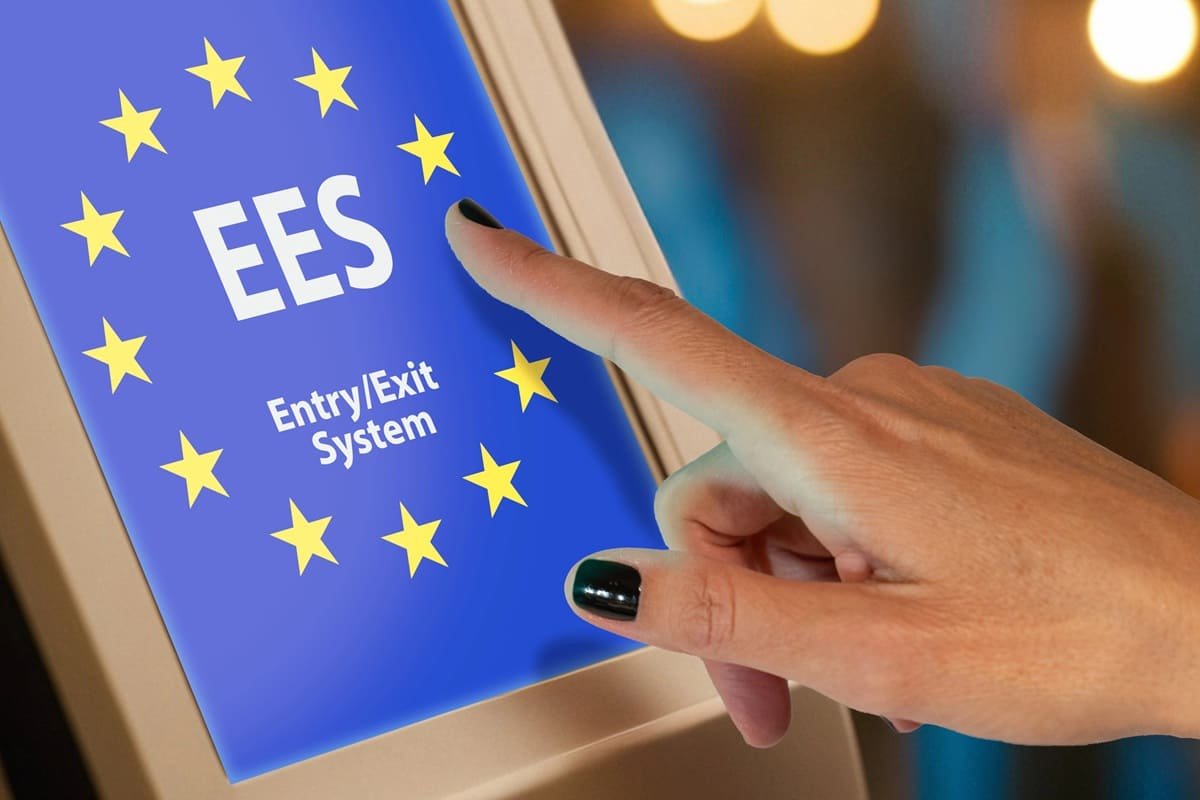
In April 2026, the EU Entry/Exit System (EES) will be fully operational.
With the full implementation of the EU's Entry/Exit System (EES) in April 2026, digital data, fingerprints, and facial recognition will take the place of passport stamps. Here are some things travelers should be aware of.
Travelers' entry and departure from Europe is gradually being altered by the European Union's new Entry/Exit System (EES). The method was originally introduced on October 12, 2025, and it was gradually rolled out in 29 European nations. It will be completely operational on April 10, 2026.
To put it simply, digital records are taking the place of passport stamps. Entry and exit information, as well as biometric data like fingerprints and face pictures, will henceforth be electronically stored by border authorities in place of physical stamping.
This is one of the most significant developments in border management in recent years for tourists considering brief visits to Europe.
Entry/Exit System (EES): What Is It?
European nations in the Schengen Area utilize a digital border control system called the Entry/Exit System (EES). keeps track of non-EU visitors' brief visits to or departures from Europe.
Enhancing security, lowering identity fraud, and expediting border inspections are the straightforward objectives.
Authorities under EES gather:
image of the face
The fingerprints
Details of the passport
Dates of entry and departure
If there are any records of denied admission
Every time a traveler crosses the border, this data is safely saved and verified.
Early Findings Indicate a Significant Effect on Border Security
Authorities have now documented over 45 million border crossings since the system went live in October 2025. Officials have been able to identify anomalous travel patterns and enhance border checks thanks to the data.
Important early figures include of:
Over 45 million crossings have been documented.
24,000 travelers were turned away.
600 people were identified as security threats.
Due to inadequate travel documentation, ambiguous visitation purposes, or suspected fraudulent paperwork, some travelers were refused admission.
The technique assisted in identifying travelers who were using numerous identities in a number of instances. For instance, Romanian border guards recogni
zed a traveler who used two different identities on various documents. The same person has already been denied admission three times by various Schengen nations, according to records.
It would be challenging to identify such cases without biometric matching.
The Significance of the EES for Travelers
Over time, the process ought to get easier for the majority of travelers. At crowded airports, automated technologies can minimize manual inspections and help prevent lengthy lines.
Simultaneously, the technology ensures that visitors adhere to the regulations for brief stays in Europe, strengthening border security.
Additionally, the EES will collaborate closely with the impending ETIAS Travel Authorization, which will soon be applicable to travelers without a visa.
The Entry/Exit System's (EES) Operation
This is a straightforward, step-by-step explanation of how the EU Entry/Exit System uses biometric border checks in place of passport stamps to digitally record traveler data.
Arrival at the Border: Your passport is scanned upon your arrival in a participating European nation.
Biometric Information Gathered: Your fingerprints and a picture of your face are used to identify you.
Data Stored Digitally: Rather than stamping the passport, your admission is electronically recorded.
Checked On Exit: The system immediately logs your departure from Europe.
Future Travel Becomes Easier: Since your information is already in the system, future border checks may go more quickly.
What This Signifies Moving Forward
The Entry/Exit System is a component of Europe's larger strategy to use technology to modernize border security. This means more digital checks but fewer stamps for travelers.
Expect biometric checks to become a standard element of travel if you intend to go to Europe starting in April 2026.
Faster borders, improved security, and more accurate travel records are the long-term goals, even though the process may initially seem novel.


