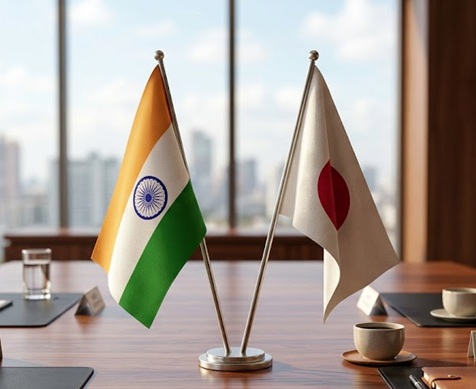
India and Japan plan a 5 lakh worker exchange over five years, with 50,000 skilled Indians set to benefit.
India and Japan are contemplating a five-year manpower exchange that could offer job possibilities for 50,000 competent Indians in sectors with labor shortages, such as healthcare, information technology, manufacturing, and construction.
With an ambitious workforce exchange plan that may see over 5 lakh workers relocate between the two nations over the next five years, India and Japan are getting ready to strengthen their labor collaboration. The plan is expected to provide work possibilities for over 50,000 qualified Indian professionals in Japan.
Japan is rapidly emerging as one of the top international employment locations for Indian job seekers searching beyond the Gulf or Europe.
What Indian Workers Will Learn from the Plan
India continues to generate millions of young professionals annually, whereas Japan struggles with an aging population and a declining workforce. The goal of the new collaboration is to link those two realities.
Opportunities for Indian labor are anticipated in a variety of industries, including:
Medical care and providing care.
Infrastructure and construction.
Manufacturing.
Technology for information.
Services and hospitality.
Transportation and logistics.
A broader trend is also reflected in the change. As labor shortages have become more difficult to ignore, Japan has gradually loosened some aspects of its immigration laws in recent years.
Options for Indian Work Visas
Depending on their credentials and line of employment, Indian nationals can work in Japan under a variety of visa types.
1. Visa for Specific Skilled Workers (SSW)
Caregiving, construction, agriculture, and hospitality are among the industries targeted by the Specified Skilled Worker visa. Japanese language proficiency of the JLPT N4 level or a comparable level is typically required of applicants.
2. Visa for Engineers, Humanities Specialists, and International Services
One of the most popular paths for professionals from India who work in Japan. Software engineers, IT specialists, engineers, translators, and other specialized positions are covered; these positions typically call for a relevant degree or work experience.
3. Visa for a Highly Skilled Professional
This visa, which is intended for highly skilled professionals under a points-based system, provides advantages including family sponsorship and extended stays in addition to quicker entry to permanent residency.
4.Technical Intern Training Program (TITP)
Technical training in fields like engineering and manufacturing is the main focus of this curriculum. Many participants go on to pursue longer-term careers in Japan.
Demand for Jobs Is Expected to Be High
Japan is still experiencing a labor shortage in a number of areas. Opportunities for Indian professionals with the necessary abilities are likely to arise in:
Healthcare: Medical support personnel, nurses, nursing assistants, and caregivers.
Construction: Technicians, electricians, civil engineers, and construction laborers.
Technology: System engineers, cybersecurity experts, AI experts, and software developers.
Manufacturing: Quality control engineers, machine operators, and auto technicians.
Hospitality: Workers in hotels, restaurants, and customer service.
Logistics: Supply chain experts, truck drivers, and warehouse employees.
The Significance of This for Indian Professionals
By encouraging more Japanese language training facilities and skill-building initiatives throughout India, the effort may increase qualified candidates' access to jobs abroad.
Moving for employment is now simpler than it was ten years ago because to direct flights from major Indian cities like Delhi, Mumbai, Bengaluru, and Chennai to Japan via carriers like Air India, Japan carriers, and All Nippon Airways.
Travunited Take
For talented Indians who are prepared to spend money on language instruction and specialized skills, we think this is a realistic prospect. Early applicants stand to gain the most as Japan gradually expands its workforce.


