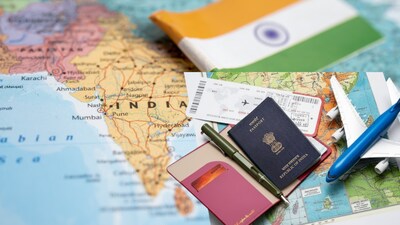
India's 30-Day Tourist e-Visa Now Permits Foreign Visitors to Enter More Than Once
India has discreetly improved its 30-day tourist e-Visa by permitting more than two entries rather than just two. While maintaining the current 30-day stay cap, the modification offers foreign tourists more freedom when organizing multi-country South Asian itineraries.
It seems that India has discreetly improved its 30-day e-Visa for tourists. The previous two-entry cap has been replaced by "Multiple entries" on electronic travel authorizations (ETAs) for travelers gaining approvals as of June 12, 2026.
This gives international visitors to India a great deal more liberty. Travelers no longer have to worry about using up all of their entry permits when they enter India, take a flight to a neighboring country, and then return.
The 30-Day Tourist e-Visa for India now permits multiple entries.
A maximum stay of 30 days from the date of entry is still allowed with the 30-day e-Tourist Visa (e-T1 V). The number of entries permitted throughout the validity period of the visa has changed.
Travelers are no longer limited to two entrances into India, according to recent permissions.After being approved, anyone requesting for a new 30-day e-Visa should carefully study their ETA, which includes:
type of visas
Deadline for first entry
Permitted duration of stay
The quantity of entries allowed
Positive News for Travel to Several South Asian Countries
Travelers who combine India with neighboring sites will find the update very helpful.
Arriving in Delhi, taking a plane to Nepal or Sri Lanka, returning to India, and finally going home may be a typical schedule. Travelers had to closely monitor entry restrictions under the previous regulations. That worry seems to be mostly gone now.
Additionally, this helps tourists visitingBhutan, Sri Lanka, and Nepal
Bangladesh, the Maldives, and other regional centers
From the standpoint of the travel business, this represents a broader trend. Small visa requirements that frequently cause greater disruptions to travel arrangements than travelers anticipate are being eliminated by nations vying for foreign tourists.
There is still a four-month entry window.
India's short-term e-Visa regulations had previously been loosened. Travelers now have 120 days instead of the prior 30 days to enter India for the first time after being granted permission, as of December 18, 2025.
This implies that when the ETA is released, travelers now have four months to arrange their journey.
Notably, the allowed stay is not extended by the rule. After arriving, visitors may stay in India for a maximum of thirty days.Extended Journeys? There Are Additional e-Visa Options
India's longer-duration tourist e-Visas might be better appropriate for those who intend to make several trips during the year. Among the choices are:
Tourist e-Visa for a Year (many entries)
Multiple admissions for a five-year tourist e-Visa
The total number of days spent in India during a calendar year is limited to 180 under both categories.
Remember to bring the e-Arrival Card.
There is more to the tourist e-Visa than just sightseeing. It can also be applied to:
Going to see friends and family
Brief yoga courses
Some volunteer work
Informal short-term programs that don't result in a degree or official qualification and run less than six months
It is important for travelers to keep in mind that the visa is neither converted or extended. The final decision about admittance is still made by immigration authorities at the port of entry. India's e-Arrival Card, which must be filled out online within 72 hours of arrival, is another frequently disregarded requirement.
This, in our opinion, is a useful enhancement that eliminates needless inconvenience for foreign guests. The new multiple-entry benefit makes it much simpler to incorporate India if you're organizing a vacation to several South Asian countries.


