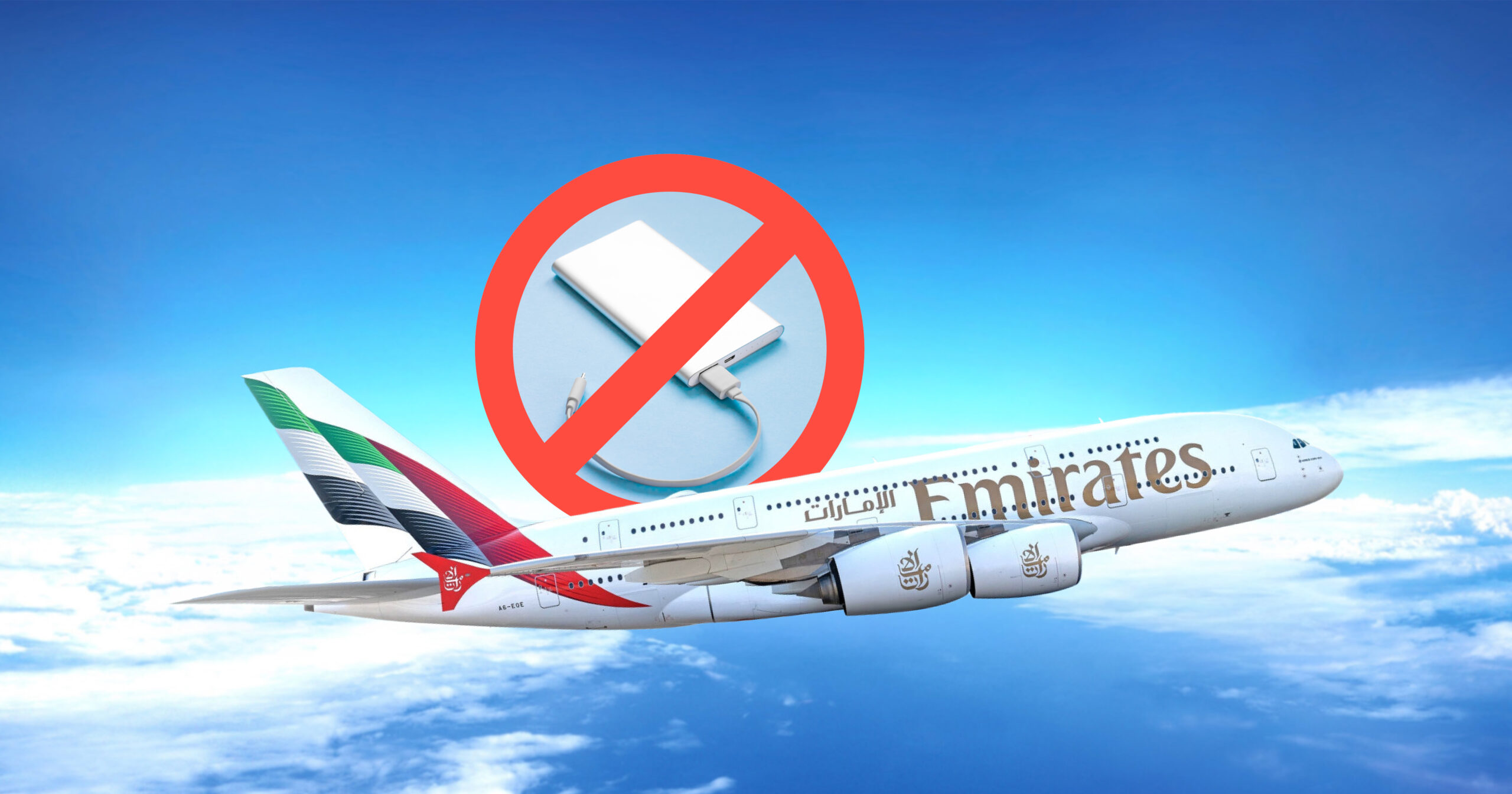
Rules on Emirates, Etihad, Flydubai, and Air Arabia are becoming stricter for power banks.
Following a cabin fire in China Eastern, UAE airlines such as Emirates, Etihad, Flydubai, and Air Arabia have tightened power bank regulations. Here are some things that foreign visitors should be aware of.
Before arriving at the airport, foreign passengers traveling to Dubai, Abu Dhabi, or Sharjah should check their cabin baggage. Following a recent onboard fire on a China Eastern Airlines flight, Emirates, Etihad Airways, flydubai, and Air Arabia are now enforcing more stringent regulations on power banks.
The message is straightforward. A power bank is permitted, however it cannot be used while in flight.
What Went Wrong with the China Eastern Flight?
The most recent trigger was China Eastern Airlines Flight MU2421, an Airbus A320 that had just touched down in Guiyang following a flight from Lanzhou on July 24. A passenger's power bank that was kept in an overhead cabin bag caught fire while the plane was taxiing to the terminal, causing smoke and flames to spread across the overhead compartment.
Although no one was hurt and the fire was swiftly extinguished by the cabin staff, the event once again highlighted the dangers associated with lithium-ion batteries in aircraft cabins.
Following a number of battery-related mishaps, China had previously tightened power bank regulations, including prohibitions on uncertified or recalled power banks on domestic flights.
New Emirates Regulations
Only one 100 Wh power bank is permitted for passengers flying Emirates to Dubai or further to Europe, North America, Africa, and Australia. Additionally, the airline mandates that travelers:
Only bring the power bank in your cabin luggage.
Never put it in checked luggage.
Instead of placing it in the overhead bin, store it beneath the seat or in the seat pocket.
During the flight, refrain from charging the power bank or any other electronic gadget with it.
Rules of Etihad Airways
Etihad Airways adheres to nearly the same safety protocols. One power bank with a maximum capacity of 100Wh may be carried by passengers as long as it is clearly identified. The gadget cannot be used onboard to recharge the power bank itself or to charge phones or tablets. Throughout the flight, it need to be conveniently accessible.
Flydubai's Policy
Flydubai allows one 100 Wh power bank without prior authorization. Airline certification is required for devices between 100 and 160 Wh, while devices over that amount are not allowed. Similar to other UAE carriers, power banks cannot be kept in checked luggage and must stay in the cabin to prevent unintentional activation.
Requirements for Air Arabia
Additionally, Air Arabia forbids customers from bringing power banks in checked luggage and mandates that they be kept in cabin baggage only. The airline's safety protocols are in accordance with broader aviation regulations in the United Arab Emirates, which forbid the use or charging of power banks while in flight.
The Reasons Behind Airlines' Stricter Power Bank Regulations
Lithium-ion batteries are used in power banks. Thermal runaway, in which the battery quickly overheats and catches fire, can occur if they are broken, poorly made, or exposed to extreme heat.
It's perilous enough to have a fire inside the cabin. It is even more difficult for cabin crew to detect a fire in its early stages when it is concealed under an overhead baggage compartment.
Airlines are moving away from merely permitting power banks to be carried on board and toward regulating their storage locations and passenger usage. This indicates that one of the fastest-growing cabin safety issues in aviation is battery safety.
Similar Restrictions Are Being Implemented by Airlines Worldwide
Power bank regulations have already been strengthened by a number of airlines, including:
Emirates
Flydubai
Etihad Airways
Air Arabia
Singapore Airlines
Scoot
Qantas
Thai Airlines
Following cases of lithium battery fires, some South Korean airlines have tightened regulations.
These days, the majority of foreign airlines adhere to the same fundamental guidelines:
Power banks have to be carried in cabin baggage.
Generally speaking, devices under 100Wh are permitted.
Batteries with a capacity of 100–160 Wh frequently need airline permission.
Power banks are not allowed in checked luggage.
What Indian Travelers Should Know About This
Millions of passengers from Indian cities like Delhi, Mumbai, Bengaluru, Chennai, Hyderabad, Kochi, and Ahmedabad are carried by UAE airlines, and many of these passengers link to Europe, the US, Canada, and Africa, so the change is significant.
If you're traveling with a UAE airline, make sure the capacity label is visible, store your power bank in your cabin bag or personal item under the seat, and refrain from using it while in flight. This quick check before boarding could prevent unwelcome attention from the cabin crew or delays at security.
Travunited Take
These regulations, in our opinion, are reasonable rather than onerous. An onboard battery fire is more difficult to replace than a power bank. Indian passengers might anticipate that more airlines would soon implement like regulations.


