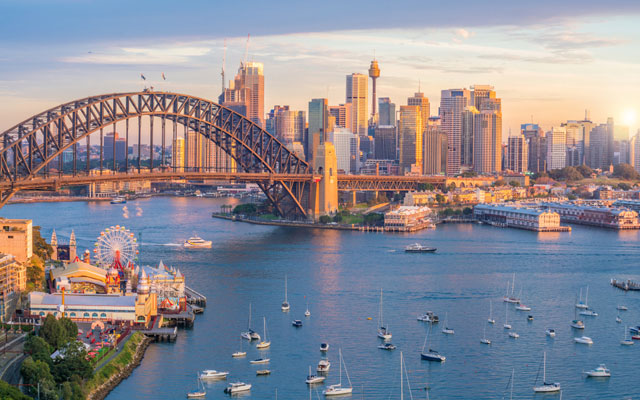
Tourism Australia's 2035 strategy focuses on high-yield growth.
Australia is focusing on the next decade of tourism growth with the unveiling of Tourism 2035, a long-term strategy aimed at strengthening the country's status as a top worldwide tourism destination.
The plan places a heavy emphasis on high-yield visitors, who provide more economic value by spending on lodging, experiences, restaurants, corporate events, and premium travel.
Tourism Australia reports that foreign visitor expenditure will reach a record A$53.2 billion in 2025, with the target high-yield traveler groups accounting for around A$33 billion. Tourism 2035 seeks to boost high-yield spending to between A$61 billion and A$69 billion by 2035.
Tourism 2035 is Tourism Australia's strategy road map for the next decade. Launched in March 2026, it investigates shifting global travel trends and identifies ways to boost Australia's competitiveness and achieve long-term international tourist growth.
The strategy is being implemented over many planning horizons, with the first phase focusing on luring high-yield travelers in Australia's most promising areas.
Focus on High-Yield Travelers.
Rather than focusing merely on boosting visitor numbers, Tourism Australia hopes to attract visitors who will spend more money on premium experiences and contribute significantly to the visitor economy.
Its target segments are:
Travelers include holiday makers, visiting friends and relatives (VFR), working vacationers, and business event attendees.
Tourism Australia's goal is to increase spending in these high-value areas while also improving Australia's worldwide tourism competitiveness.
Why Does High-Yield Tourism Matter?
High-yield tourism can assist several sectors of Australia's economy.
Visitors who spend more can help to:
• Luxury hotels and resorts.
• Restaurants and culinary experiences
• Domestic Flights and Transportation
• Adventure and nature-based activities.
• Shopping and Retail
• Cultural Attractions
• MICE and Business Events
• Regional tourist enterprises.
This method also offers a chance to attract overseas visitors to discover destinations outside than Australia's major cities.
India Could Become an Important Market.
India has an especially important long-term prospect for Australia's tourism industry.
The Australian Department of Foreign Affairs and Trade has previously anticipated that the number of Indian visitors will expand significantly by 2035, with Indian visitor expenditure potentially reaching A$6.1 billion in a moderate scenario and A$9.1 billion in an aspirational scenario. The strategy targeted luxury leisure travel and business travel, especially MICE, as key development areas.
This opens up potential for Australia to attract more Indian visitors interested in:
• Luxury vacations
• Family trips.
• Honeymoons
• Business Travel
• MICE programs
• Premium natural experiences
• Food and Wine Tourism
• Longer multi-city itineraries.
Australia's famous attractions continue to lay a solid foundation for premium tourism.
Sydney
Sydney has a diverse range of city experiences, harbor attractions, food, culture, and major events. The Sydney Opera House and Sydney Harbor Bridge are two of Australia's most well-known international tourism attractions.
The Great Barrier Reef offers a variety of quality marine activities, including diving, snorkeling, island stays, and nature tourism.
Uluru and Australia’s Outback
The Australian Outback allows visitors to immerse themselves in Indigenous culture, scenery, and one-of-a-kind natural experiences. Premium guided tours and luxury accommodations can boost visitor spending while also creating economic prospects in surrounding areas.
Melbourne and Food & Wine Tourism
Melbourne is well-suited for those interested in food, arts, sports, and culture. Nearby wine areas also provide superior food and wine experiences.
Business Events and MICE Tourism.
Business events are an important part of Australia's high-yield tourism strategy.
International conferences, incentive programs, exhibitions, and business events can result in large spending on lodging, transportation, restaurants, venues, and local experiences.
For the Indian market, this is especially important because MICE and business travel have been identified as potential growth areas in Australia's long-term tourist connection with India.
A More Competitive Australia.
Tourism Australia reports that global competition for international travelers is at an all-time high. tourist 2035 intends to generate future demand, competitiveness, and resilience for Australia's tourist business, rather than just increasing visitor numbers.
What Tourism 2035 Means for Indian Tourists
For Indian travelers, Australia's plan may result in increased advertising of premium and personalized experiences.
Instead of focusing solely on traditional tourism, future travel ads may increasingly emphasize:
Luxury plus nature, culture, food, adventure, and business events.
This could help Indian travelers looking for tailored Australia vacations, luxury honeymoons, incentive trips, family vacations, and longer multi-destination itineraries.
Australia Tourism Outlook to 2035.
tourist 2035 marks a transition toward value-driven tourist growth. Australia's goal is to attract visitors who will stay longer, spend more, and participate in a wider choice of places and activities.
With strong potential in markets such as India and sustained investment in premium experiences, business events, and destination marketing, Australia is poised for a new era of international tourism growth.
Conclusion
Tourism Australia's 2035 plan places a strong emphasis on high-yield, sustainable, and competitive tourism growth. With international visitor expenditure now at record levels, the country is focusing on high-value segments, aiming to raise their contribution to between A$61 billion and A$69 billion by 2035.


